Tench and barbel
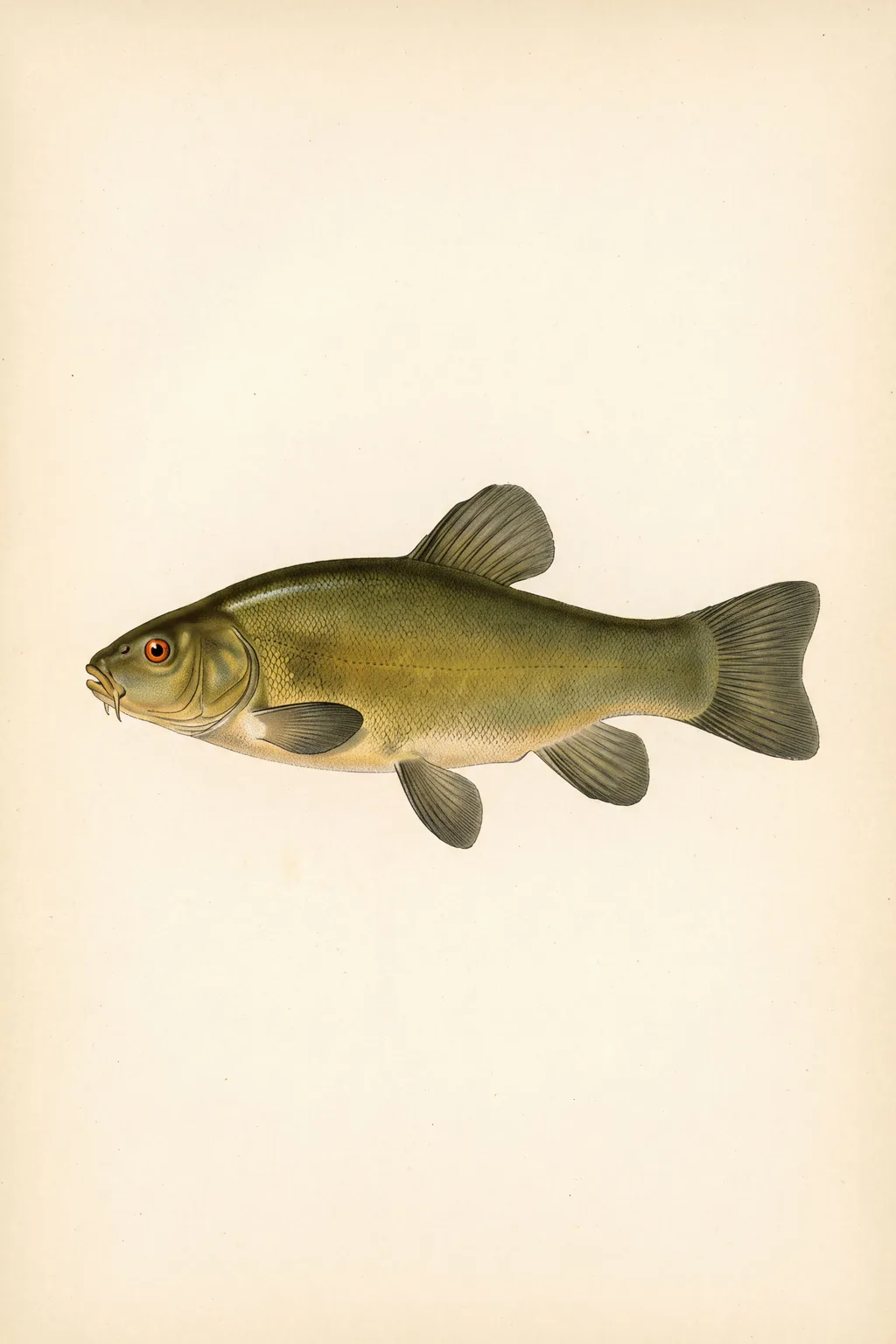
Tench have olive-green flanks, rounded dark fins and distinctive red eyes, according to the Wildlife Trusts. Some show a golden-orange throat and belly. They like soft-bottomed lakes and slow rivers with plenty of weed, and a big one rolling at first light is hard to beat.
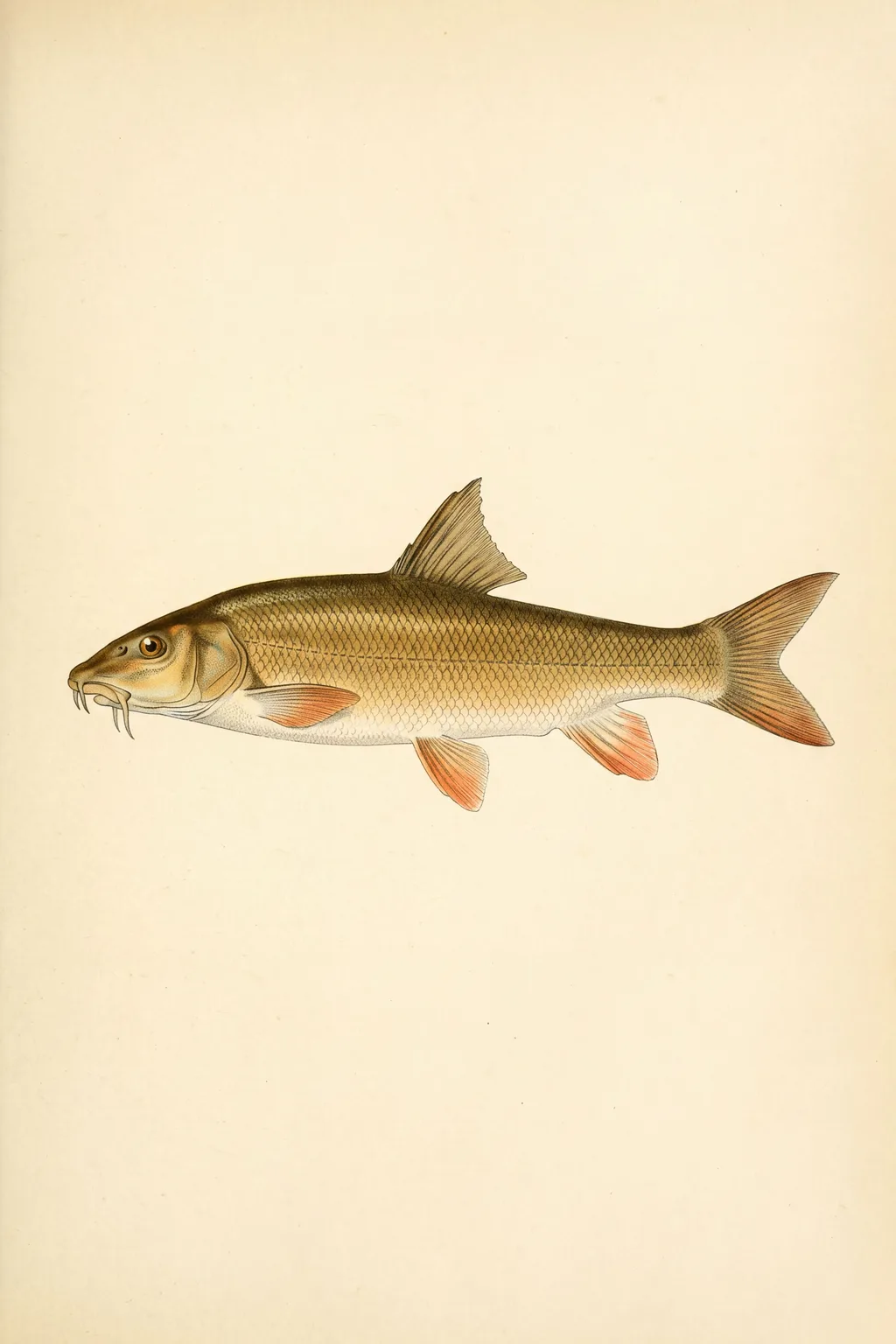
Barbel have four sensitive barbules round a heavily underslung mouth, built to burrow into the riverbed. The Angling Trust places them in medium to fast rivers across England and Wales. They need clean, well-aerated gravel to breed. They fight hard. They look it.
Perch, chub and roach
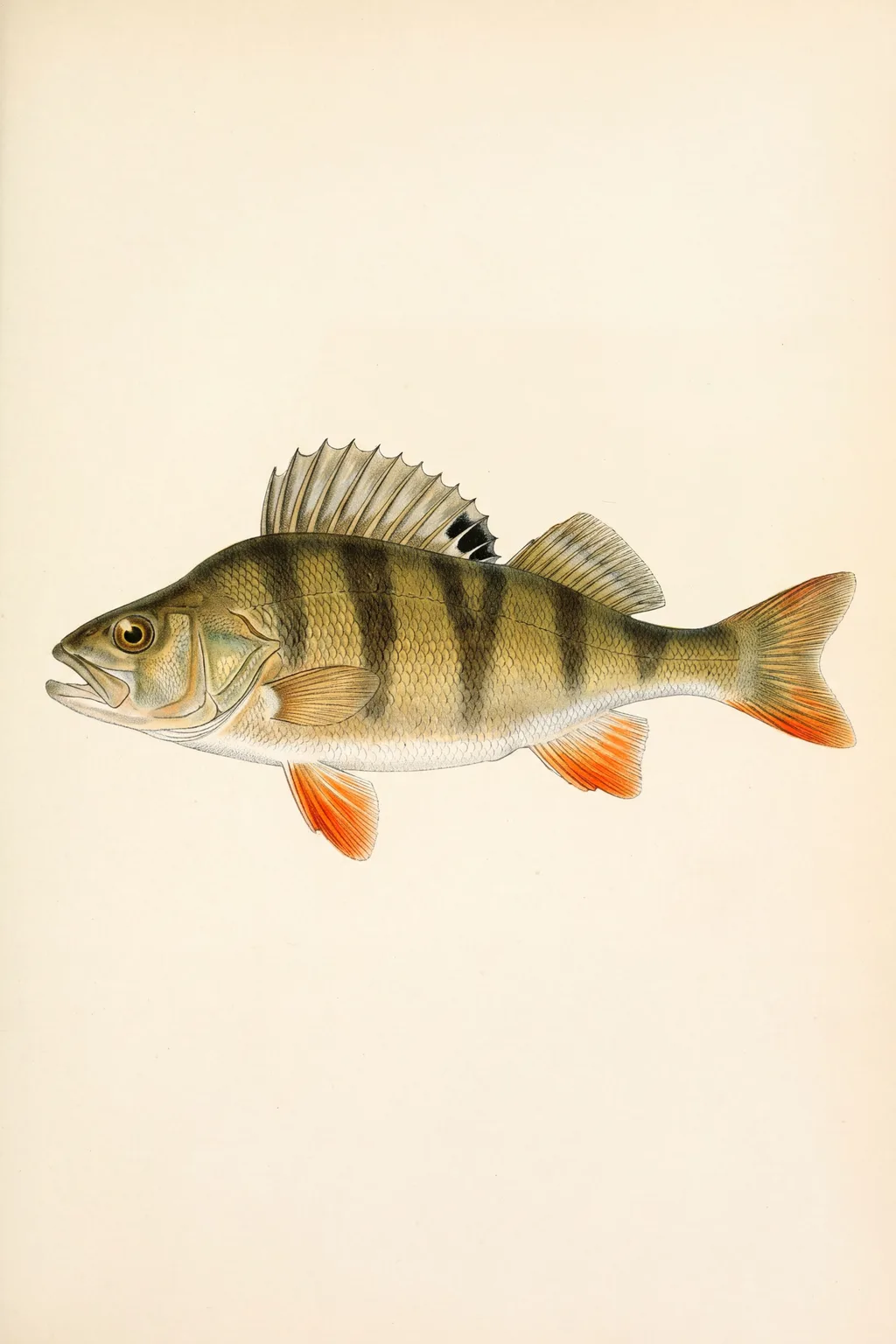
Perch are greenish, with dark tiger stripes, a large spiny dorsal fin and red lower fins and tail. The Wildlife Trusts note they're often seen in shoals, and most of us caught one on a worm as kids.
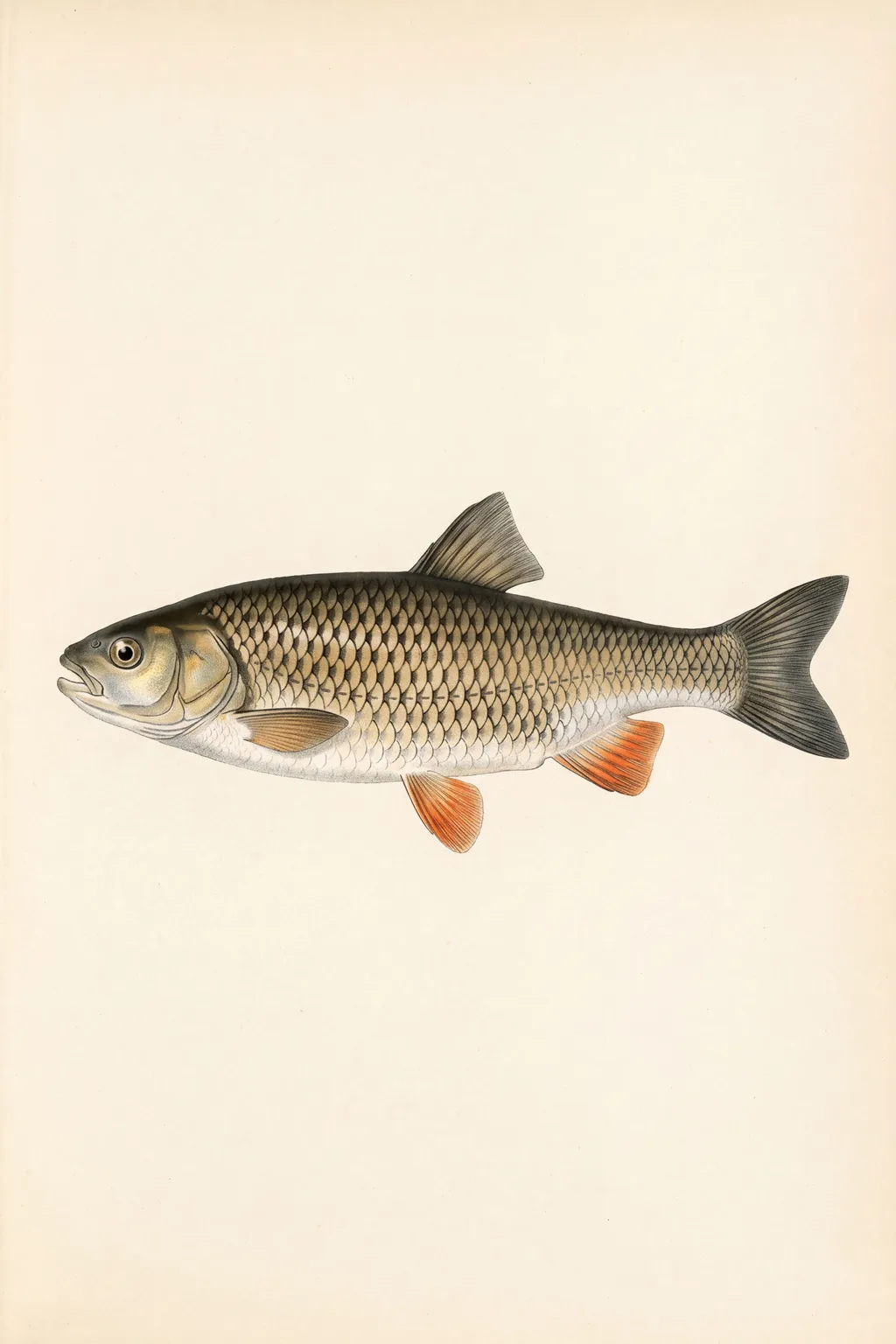
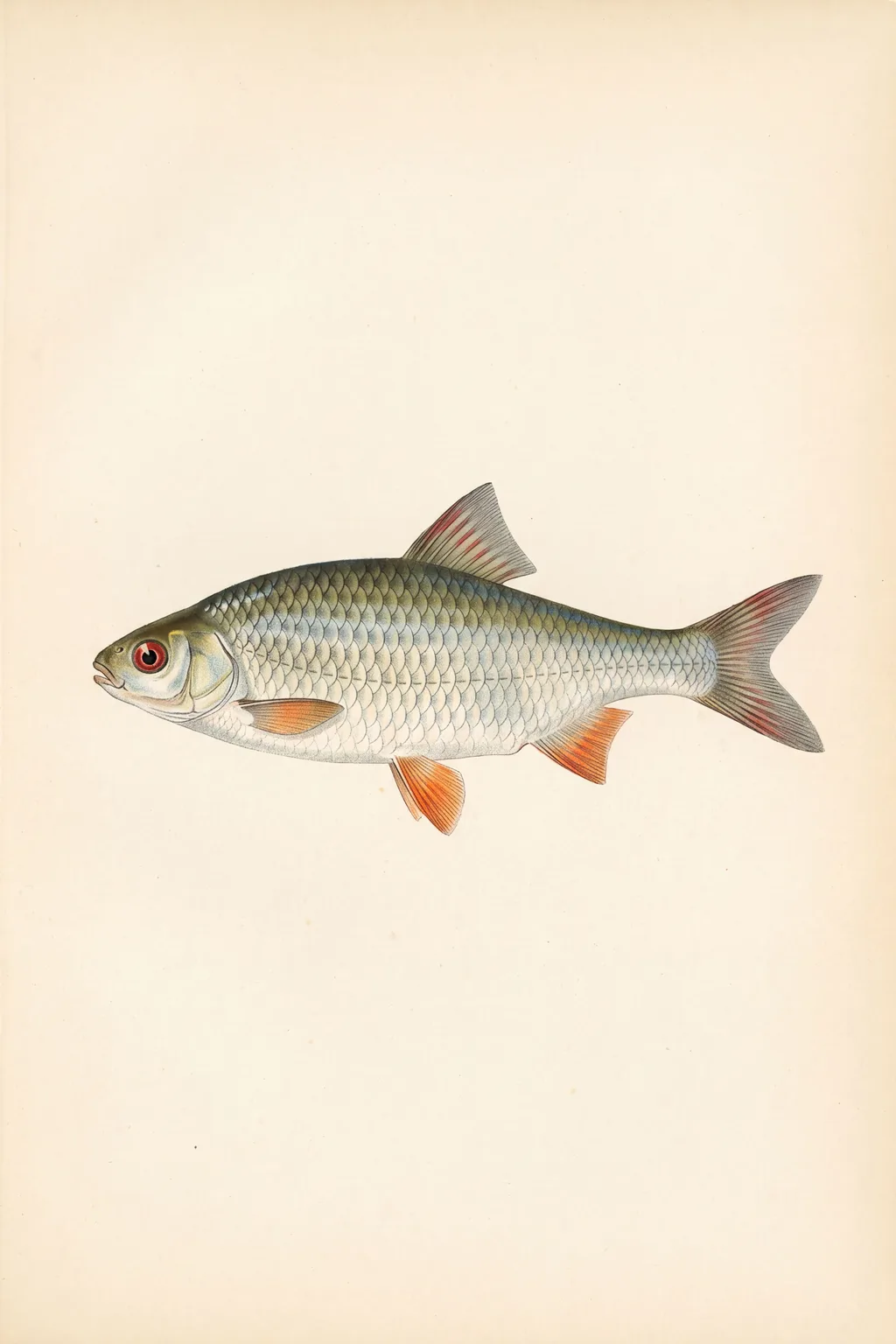
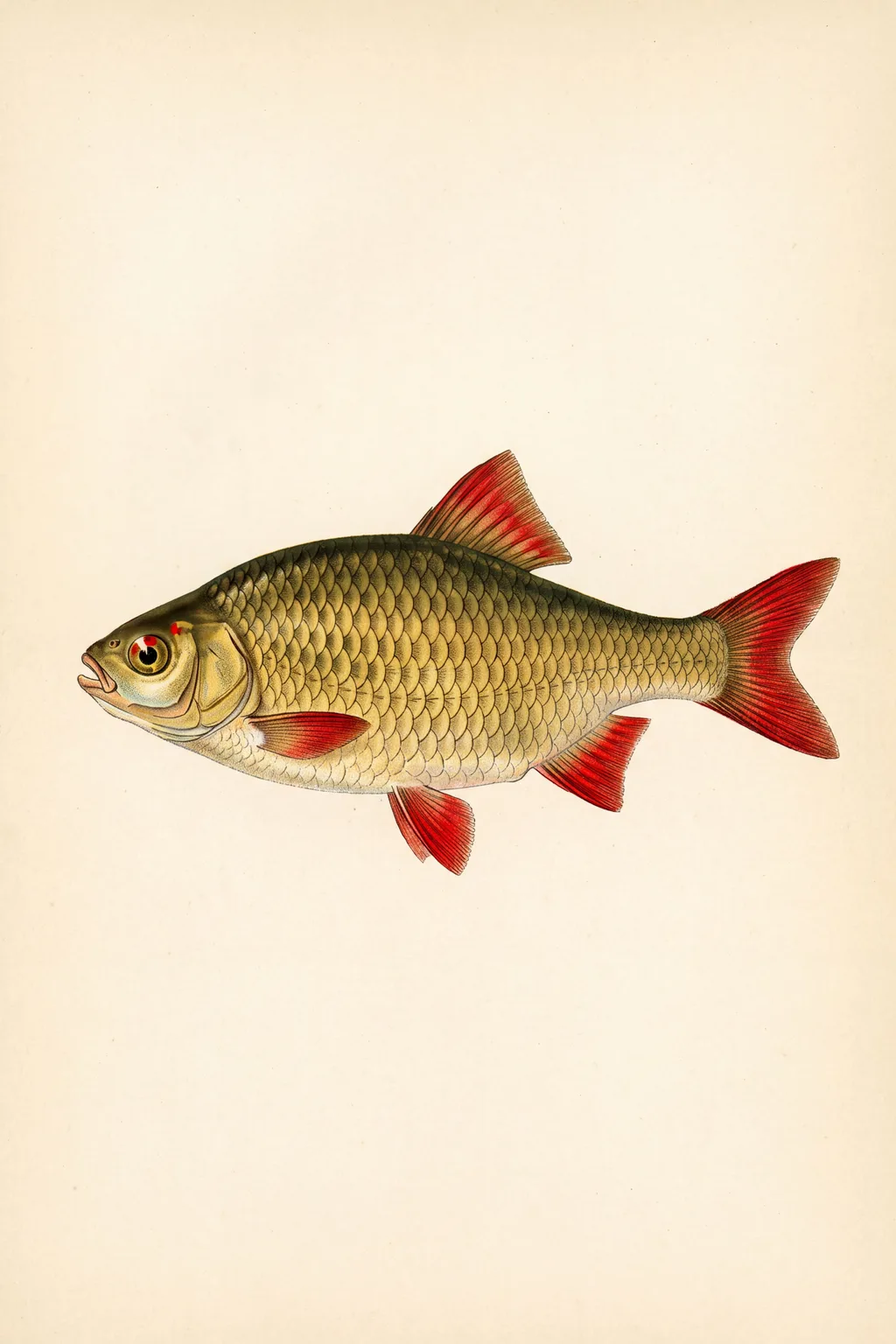
Chub are slender and greenish-silver, with reddish, rounded fins, and they gather in shoals in lowland rivers (Wildlife Trusts). Roach are deeper-bodied and silvery, with dark reddish-brown fins. They're easily mixed up with rudd, whose protruding lower lip gives it away (Wildlife Trusts).
Bream, the slab
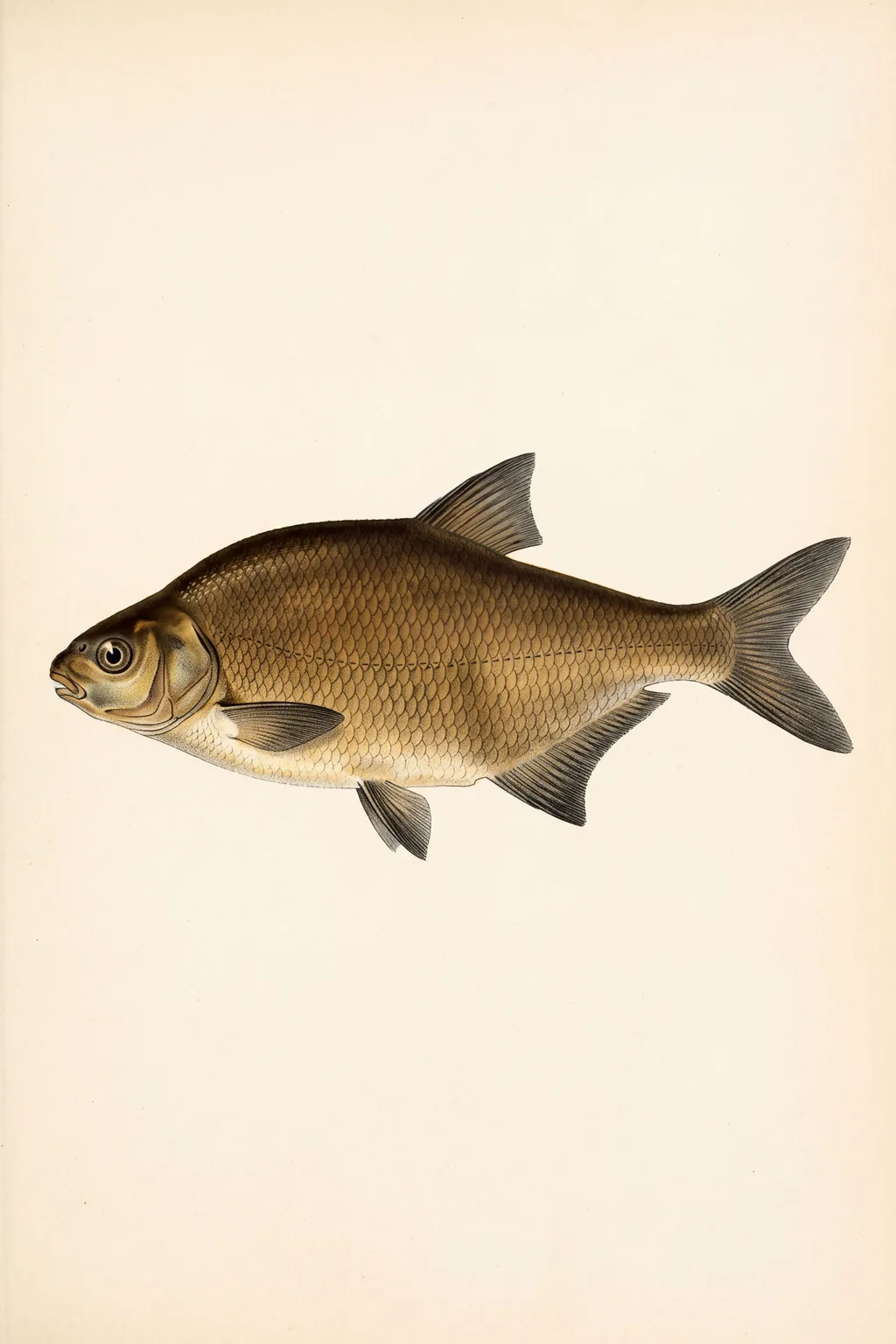
A big bream is deep and bronze, the fish anglers call a slab. The Canal & River Trust describes a dark brown or greyish back, with younger fish much more silvery. They shoal. They feed slowly along the bottom.
On canals, the Trust's own fisheries manager suggests the early morning or late evening for a feeding shoal, when boat traffic has died down. A bream plate suits anyone who's sat out a long evening for one.
Crucian carp
The crucian is the coarse angler's quiet favourite: small, round and golden, with no barbels at all. It's a separate species from the carp, and a scarce one, protected according to the Canal & River Trust. Our types of carp guide shows how to tell one from a small common. Catch a good one and you won't forget it.
Coarse fish and the close season
River coarse fishing in England stops for three months every spring. The GOV.UK rod fishing rules set the dates at 15 March to 15 June. Lakes and canals mostly carry on, but a private water can shut whenever its owner decides, so ask. The Angling Trust's close season guide covers the detail. A plate on the wall fills the gap.
The rivers reopen in mid June, a few days before Father's Day, which makes a river species plate a well-timed present.
Hanging a set
Coarse plates work well in pairs or threes. Choose fish from the same water, or fish from the angler's own history: the perch they started on, the tench they waited years for. Keep the frames the same. Leave a hand's width between them. If the angler fishes one river, three plates of the fish they catch there tell that river's story better than any map.
A3 framed prints, each holding a 297 x 420 mm print, make a neat row along a hallway. Three A2 posters fill the wall above a sofa, and our print sizes guide helps with the measuring if you're unsure.
Your own coarse fish
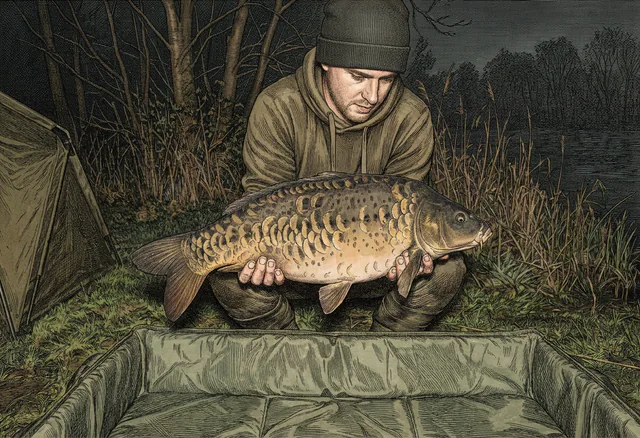
A specimen tench or a double-figure barbel deserves its own print, especially if it took a season of early mornings to catch. Upload the catch photo and print it as it is, or see it in a house style with a free preview. Check the fins and scales first.
For the record weights, see our British record fish list, taken from the official listing. Our catch photo guide covers getting a shot that prints well.