How to use it
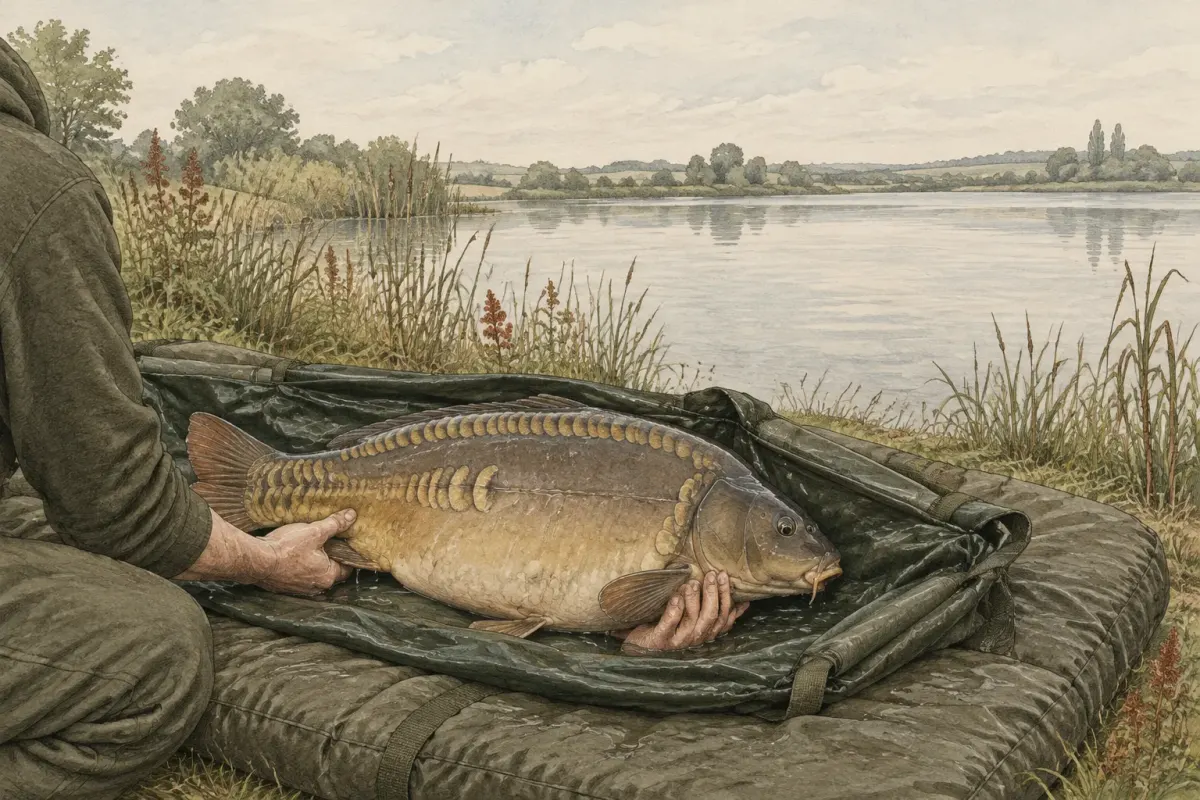
Measure the fish on the mat from the tip of the nose to the tip of the tail, in a straight line. Pick its build if you can: lean, average or deep. If you are not sure, leave it on Not sure and you get the widest range. The answer is a range on purpose. Two carp of the same length can be several pounds apart.
How it is worked out
This is our own method, not anyone else's formula. The Environment Agency measures and weighs fish in its river and lake surveys and publishes the records in its Ecology and Fish Data Explorer under the Open Government Licence. We took every common and mirror carp of 20 cm and over with both a length and a weight: 284 fish from 1983 to 2022. We drew the best straight line through their lengths and weights on a log scale, dropped the 4 fish that sat far off it, and fitted the line again to the 280 left.
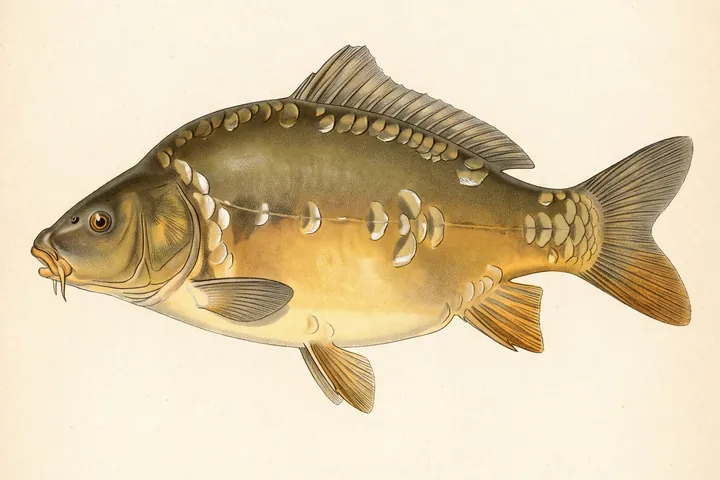
That line says a carp's weight in grams is about 0.0267 × its length in cm to the power 2.97. A 60 cm fish comes out at about 5.2 kg, or 11lb 8oz. Real fish spread around the line, and the build picks which part of the spread you see. Lean is the lower half of the spread, average the middle half and deep the upper half. Not sure covers the middle eight in ten.
When to trust it less
The longest carp in the survey was 76 cm. Past that the tool is stretching the curve beyond the data, and it tells you so. Big carp in fed lakes can be far deeper than wild river fish. For a weight to claim, use scales. Our fish weight converter turns that weight into kilograms or back again.
Craig Fearn runs Scale & Fin, a UK studio that prints anglers' catch photos and fish art to order. He writes the guides here, and every fact in them links to the body that published it.